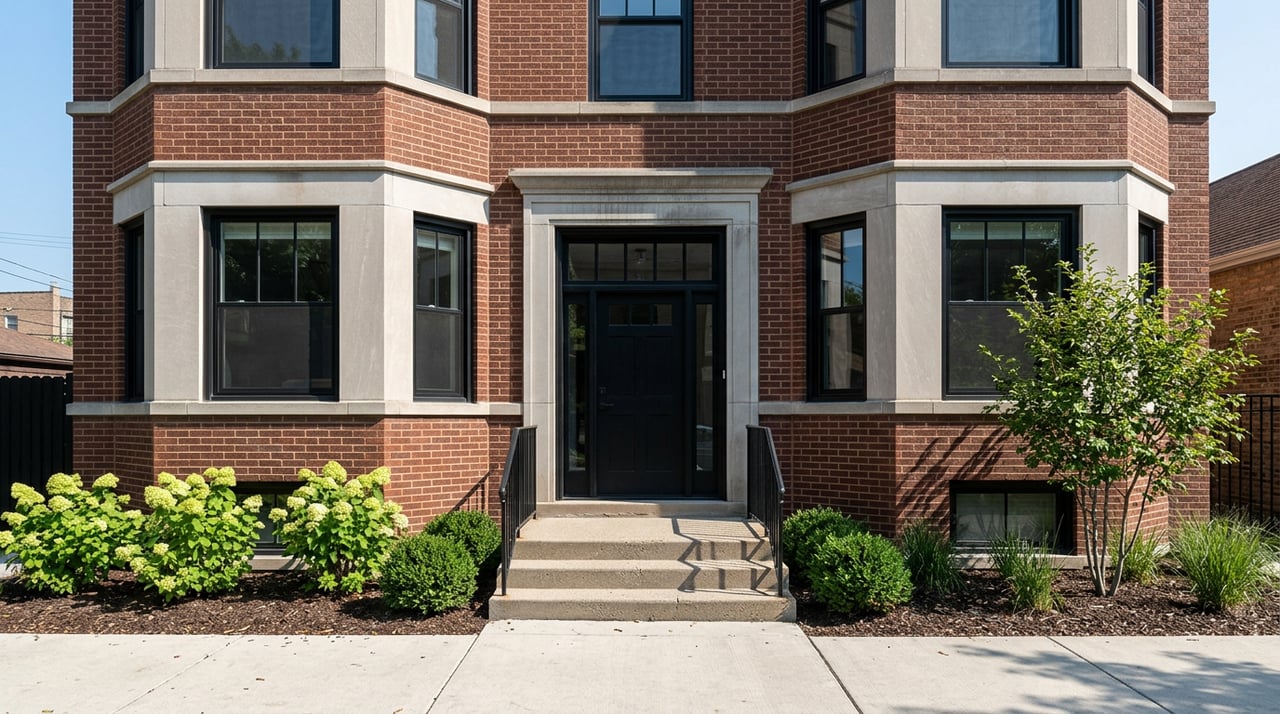
Thinking about house-hacking in Logan Square with a classic two-flat or small multifamily? You are not alone. The neighborhood’s transit access, lively dining scene, and proximity to the 606 have made these buildings a favorite for buyers who want both lifestyle and income. In this guide, you will learn how pricing and rents pencil out, what cap rates to target, the zoning and permit checks to run, and which financing paths can help you own a 2–4 unit with a low down payment. Let’s dive in.
Why Logan Square works for two-flats
Logan Square combines strong renter demand with a deep inventory of 2–4 unit vintage buildings. Tree-lined boulevards, greystones, and stacked two-flats are common, and many lots have alley access that supports parking or future improvements. This creates a natural fit for owner-occupants and small investors.
Blocks near the 606 have seen meaningful market attention. Academic research found price pressure and displacement risk within about a half mile of the trail after it opened, which helps explain both appreciation patterns and policy responses in the area. You can review a peer‑reviewed summary of those impacts in this study of the 606 corridor and housing prices from ScienceDirect. For regional context on displacement risk, the DePaul Institute for Housing Studies provides a map-based view of neighborhood pressures across the city.
Transit matters to rentability in Logan Square. Blue Line access and frequent bus routes make commuting to the Loop straightforward for many renters, and the local restaurant and nightlife scene keeps demand steady.
What these buildings cost today
Prices vary widely by block, lot width, condition, and whether major systems have been updated. A typical two-flat price band as of 2025 to early 2026 runs roughly from about $350,000 for deep fixers to $1.2 million or more for fully renovated buildings or premium boulevard addresses. Well-kept, non-gut two-flats often land somewhere in between. Expect premiums for Logan Boulevard and Palmer Square, for new or recent mechanicals, and for parking.
When you compare medians across public trackers, remember that sources often mix different property types and timeframes. Focus on like-for-like small-multifamily comps and the building’s actual rent and expense profile.
What rents to expect
Logan Square asking rents in early 2026 cluster around the low‑$2,000s on average. RentCafe’s neighborhood snapshot for February 2026 reported an average rent of about $2,249, with one-bedroom averages near $2,197 and two-bedroom averages around $3,100 in their dataset. See neighborhood-level rent trends in RentCafe’s Logan Square report.
For two-flat underwriting, set conservative rents tied to your unit mix and finish level. Many stacked 2BR units perform near the broader two-bedroom averages if updated. Vintage layouts and garden units may fall below, while duplexes with outdoor space can approach the top of the range.
Underwriting basics: caps, vacancy, and GRM
- Cap rates: Broad Chicago multifamily data in late 2025 shows cap rate medians around the mid‑6 percent range metro-wide. In Logan Square, stabilized two-flats on strong blocks often trade at lower caps, while value-add buildings that need work can support higher caps. A reasonable underwriting range is about 4.5 to 8 percent depending on risk and condition. Review the Matthews Q4 2025 Chicago multifamily report for cap rate context.
- Vacancy: Metro vacancy hovered around roughly 4.5 to 5 percent in late 2025. For a smaller 2–4 unit, underwrite a more conservative 5 to 8 percent to account for turnover and downtime. The Matthews report also provides vacancy context.
- GRM: Gross Rent Multipliers vary widely in small deals. Rather than fixating on a target GRM, calculate your building’s actual NOI and stress it with realistic expenses and reserves.
A quick two-flat pro forma
Here is a simple, illustrative example using conservative assumptions. Swap in real rent comps and tax bills for any live deal.
- Scenario: Two 2BR units at $2,200 each per month. Gross monthly rent $4,400. Annual scheduled rent $52,800.
- Vacancy and collection loss at 6 percent. Effective gross income about $49,632.
- Operating expenses at 35 percent of EGI for taxes, insurance, water, sewer, repairs, and management. Expenses about $17,371.
- Estimated NOI about $32,261.
- At a 5.0 percent cap, the implied value is roughly $645,220. If you pay $700,000, your going‑in cap is about 4.6 percent.
Use RentCafe’s Logan Square trends to set rent assumptions and the Matthews report to sense‑check cap rates and vacancy. Always verify taxes, utilities, and any landlord-paid services from actual invoices.
Zoning and legal checks before you bid
Understand the current zoning and any overlays on the parcel. Many Logan Square residential blocks carry RT‑4 zoning, which allows two-flats, townhomes, and low-rise multiunit buildings, but exact allowances vary by lot. Look up the specific lot and RT‑4 standards using the Second City Zoning reference.
Be aware of local policy actions near the 606. The City has used demolition surcharges and other measures in targeted pilot areas to slow the loss of multiunit housing tied to redevelopment pressure along the trail. That can affect permitting timelines and options for teardowns or deconversions near the 606. For background, see local reporting on demolition fees near the 606 and the DePaul IHS displacement risk map.
Confirm the legal unit count and permit history. Recent notices show active two-flat permits and conversions in Logan Square, which is a reminder to check for open or unresolved permits and to confirm prior work was completed with inspections. As a reference point, see a recent Logan Square two-flat permit example on Chicago YIMBY.
Financing your house-hack: FHA and conventional
Owner-occupants have two common routes for 2–4 units.
- FHA 2–4 units. FHA financing allows you to purchase a two to four unit property with a low down payment, generally 3.5 percent for eligible borrowers. Loan limits vary by county and unit count, and 3–4 unit purchases have additional reserve rules and a self-sufficiency test. Review the FHA multifamily purchase framework and confirm details with an FHA-approved lender using this FHA overview from FreeAndClear.
- Conventional 2–4 units. Industry guidance in late 2023 expanded conventional options that allow as little as 5 percent down for owner‑occupied 2–4 unit purchases, subject to lender implementation, LTV caps, reserves, and PMI. This change opened a path to house-hack with conventional rates and private mortgage insurance rather than FHA mortgage insurance premiums. Read an overview of the Fannie Mae 5 percent down option and confirm current program terms with your lender.
Practical tips: plan to occupy the property for at least 12 months under common owner‑occupant rules. Ask your lender how projected rental income will be treated in your debt‑to‑income calculation and what reserves are required for 3–4 unit scenarios.
Rehab and value-add ideas
Most Logan Square two-flats are older and benefit from targeted updates. Common scopes include kitchen and bath refreshes, window replacement, tuckpointing, roof work, upgraded electrical panels, plumbing updates, and new heating systems. Separating utilities where code allows, addressing porches and garages, and creating private outdoor space all help rentability.
Budget ranges vary by scope and finish level. Chicago-area contractor guidance suggests a cosmetic refresh across two units may run about $60,000 to $100,000 total, while mid-range dual-unit renovations often range from $150,000 to $250,000. Use written bids for project-level budgeting and see Assembly Service IL’s cost ranges for two-flat work.
Plan for lead-safe practices if the building predates 1978. Include line items for testing, remediation, and city or state compliance as needed.
Due diligence checklist
Use this quick checklist to stay organized:
- Confirm legal unit count and zoning on the parcel. Review RT‑4 standards and any overlays with Second City Zoning.
- Pull the last 12 months of leases, rent rolls, and expense invoices. Verify security deposits and any outstanding code items.
- Order a full inspection and scope for structure, roof, mechanicals, and environmental risks. For budgeting context, see Assembly Service IL’s two-flat cost guidance.
- Run a conservative pro forma with a stress case. Include 5 to 8 percent vacancy and 10 to 20 percent annualized reserves for capital items.
- Confirm your financing path early. Compare FHA versus conventional 5 percent owner‑occupied options and verify reserve and occupancy rules with your lender. FreeAndClear’s FHA overview is a helpful starting point.
Local risk and policy signals to watch
Blocks near the 606 may combine strong rent demand and long-term appreciation with stricter demolition and deconversion rules. That can be positive for preserving multiunit housing, but it also means entitlement timelines may be longer and community review more involved. For policy background, see coverage of demolition fees near the 606 and the displacement risk resources from DePaul IHS. For price impact research, review the ScienceDirect study on the 606 corridor.
How to approach your first Logan Square two-flat
- Start with the numbers. Underwrite multiple rent and expense cases. Use a lower cap target for renovated, A‑location buildings and a higher cap for value‑add deals.
- Inspect early and often. Tuckpointing, roofs, porches, and mechanicals drive near-term capex.
- Align financing with your timeline. If you plan to renovate before occupying, confirm how that affects loan timing and occupancy requirements.
- Know your zoning. RT‑4 and any local overlays will define what you can add, remove, or convert on the lot.
- Think like a future seller. Parking, outdoor space, separate utilities, and tasteful finishes usually hold value in Logan Square.
When you want a second set of eyes on the underwriting, local comps, and zoning path, we are here to help. Connect with the neighborhood-focused team at Chicago Home Partner to pressure-test your plan and map the next steps.
FAQs
What cap rate should I target for a Logan Square two-flat?
- For renovated, premium-block buildings, model about 4.5 to 5.5 percent stabilized caps, and for value-add or heavier-rehab properties, underwrite 6 to 8 percent or higher based on risk, using metro cap medians from the Matthews Q4 2025 report as a reference.
How much vacancy should I plan for in a 2–4 unit?
- Use 5 to 8 percent for a small Logan Square building, and consider 8 to 12 percent during gut rehab or major turnovers, noting that metro vacancy was roughly 4.5 to 5 percent in late 2025 per Matthews.
Can projected rent help me qualify for a loan on a two-flat?
- Yes, both FHA and conforming conventional programs consider projected rental income with certain adjustments and reserve rules, so confirm the specifics with your lender and review the FHA overview from FreeAndClear.
What is RT‑4 zoning and why does it matter?
- RT‑4 is a residential district that allows two-flats, townhomes, and low-rise multiunit buildings with specific standards by lot, so you should verify parcel zoning and allowances using Second City Zoning before planning any changes.
How do 606-area policies affect small-multifamily plans?
- Near the 606, demolition surcharges and related measures aim to slow the loss of multiunit stock, which can lengthen timelines or limit deconversions, so factor policy and permitting into your underwriting and see Sun‑Times coverage and the DePaul IHS map for context.