Wondering if a Lincoln Park townhome is the sweet spot between a condo and a single-family home? If you are juggling work, commute time, monthly costs, and the need for more space, that question is probably more practical than theoretical. In this guide, you will learn what Lincoln Park townhomes typically offer, where buyers get tripped up, and how to screen options quickly in a competitive market. Let’s dive in.
Why Lincoln Park townhomes stand out
Lincoln Park is a natural place to shop for townhomes because the housing stock already leans heavily toward attached and multifamily living. CMAP data shows just 11.2% of housing units are detached single-family, while 9.8% are single-family attached and 41.0% are in buildings with 20 or more units. That mix helps explain why townhomes feel like a practical middle-ground option here.
The neighborhood also supports a car-light lifestyle. CMAP classifies 99.8% of resident and job locations as high walkability and 100.0% as high transit availability. At the same time, 30.9% of occupied households have no vehicle and 48.4% have one vehicle, which means parking may be flexible for some buyers but still deserves close attention.
Lincoln Park is also competitive. Redfin’s May 2026 snapshot shows a median sale price of $849,714 across all home types, with a median of 33 days on market. Last month, there were 47 townhouses listed versus 271 condos, so townhomes are a smaller inventory segment and often require faster decision-making.
What Lincoln Park townhomes usually offer
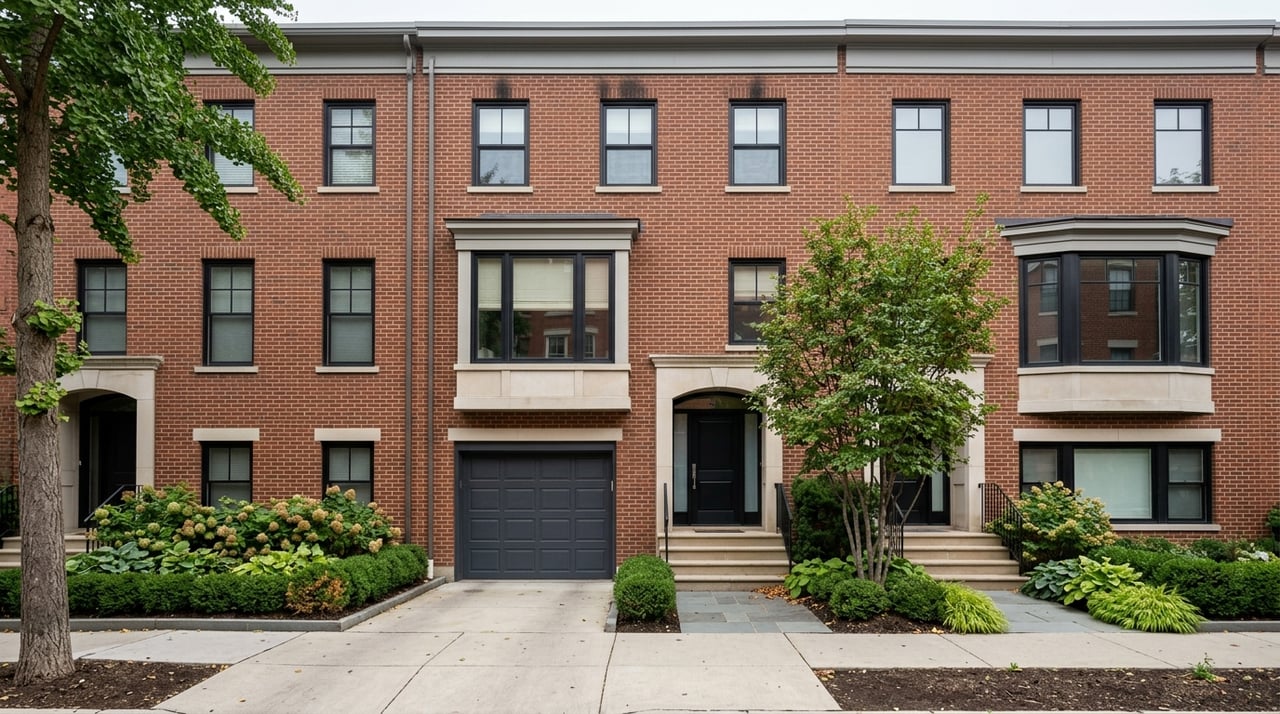
If you are picturing a condo with extra stairs, that is usually too simplistic. Recent Lincoln Park townhome listings more often show homes with 2 to 4 bedrooms, 2 to 3.5 bathrooms, and 3 to 4 levels. That layout tends to create more separation between living, sleeping, and work-from-home space.
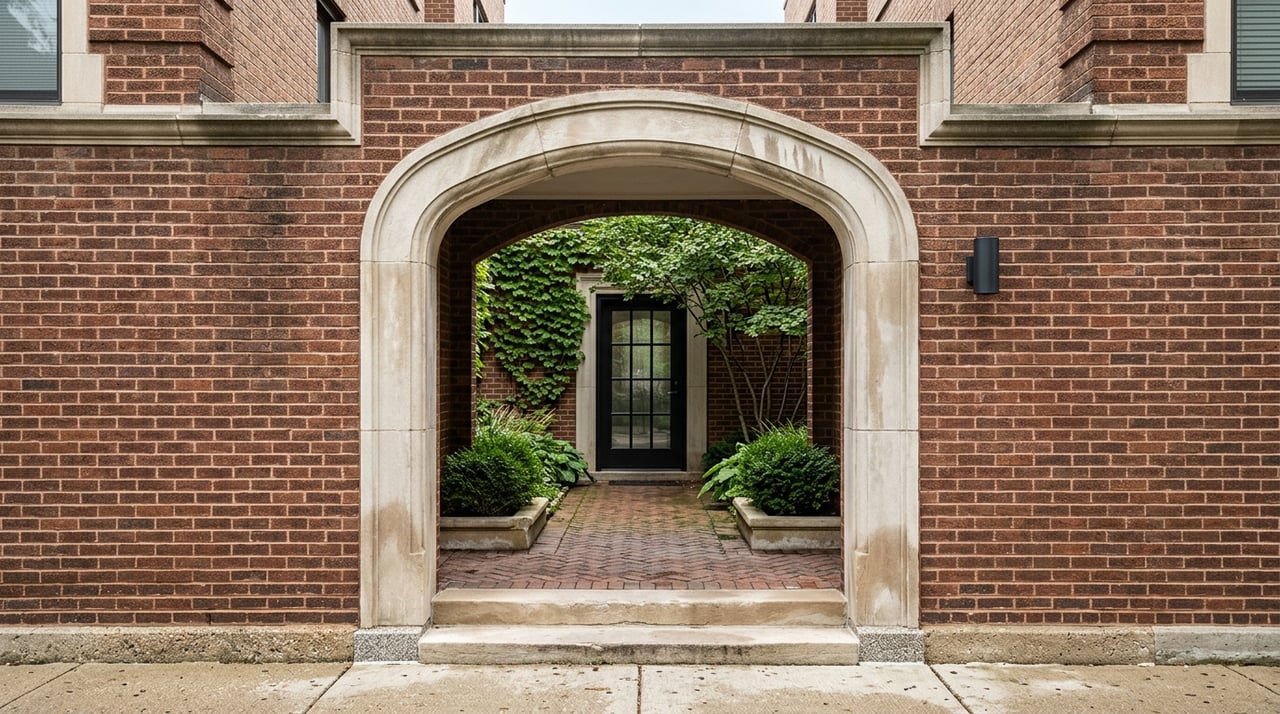
You will also see a fairly consistent set of features. Open kitchens, main-level powder rooms, rooftop decks or terraces, courtyard or gated entries, and private outdoor space show up again and again in current listings. Some larger or newer homes include elevators or two-car garages, but those are upgrades rather than standard features.
For busy professionals, that layout can be a real advantage. A multi-level townhome often gives you more house-like flow than a condo, while still avoiding some of the larger upkeep demands that can come with a detached home. In Lincoln Park, that balance is a big part of the appeal.
Why parking matters more than you think
Parking is one of the biggest dividing lines between one Lincoln Park townhome and another. Current listings include attached one-car garages, detached one-car garages, attached two-car garages, assigned garage spaces, and offerings where garage parking is included but structured differently. That means you should never assume parking is straightforward just because the home is a townhome.
If a home does not include deeded parking, street parking rules may shape your daily routine. The Chicago City Clerk says residents in a designated Residential Parking Zone may add that zone number to their City Sticker or buy 24-hour residential parking daily permits. The zone must match the street signs on the block.
For many buyers, parking becomes a lifestyle issue before it becomes a resale issue. If you commute by car, host frequent guests, or simply want predictable convenience, parking should be one of your first filters. In a highly walkable area like Lincoln Park, some buyers can compromise here, but only if the tradeoff truly fits their routine.
HOA dues tell an important story
Monthly dues can vary a lot in this segment. Recent examples range from $24 per month to $175, $250, and even $616 per month. That kind of spread usually points to meaningful differences in maintenance scope, reserve funding, and shared costs.
This is why list price alone does not tell the whole story. A lower-priced townhome with higher dues may cost more monthly than a higher-priced option with lower assessments. The better comparison is total monthly ownership cost, not just the number on the listing.
You also want to know what those dues actually cover. Exterior maintenance, landscaping, shared insurance, snow removal, roof work, and reserve contributions can all affect value. Two homes can look similar online and function very differently once you understand the association structure.
The legal structure matters
This is where many buyers need to slow down. According to the Illinois Department of Financial and Professional Regulation, most homeowners associations are governed by either the Illinois Condominium Property Act or the Illinois Common Interest Community Association Act. That legal framework affects what you own, what the association controls, and how future costs may be handled.
In a condo structure, you own your unit and co-own the common elements. In a non-condo common interest community, owners generally own their land and private residence while paying assessments for shared facilities. The state specifically notes that common interest communities can include attached or detached townhomes, villas, or single-family homes.
The practical takeaway is simple. Do not rely on marketing language alone. A home described as a townhome may have a legal and financial structure that works very differently from another townhome a few blocks away.
Documents to review before you commit
If you are serious about a Lincoln Park townhome, document review is not busywork. It is one of the best ways to understand risk, future costs, and day-to-day ownership expectations. Illinois statutes require boards to maintain and make available key records, including financial records, contracts, minutes, and reserve studies.
Ask for these items as part of your due diligence:
- Declaration
- Bylaws or operating agreement
- Current budget
- Reserve study
- Insurance summary
- Recent board minutes
- Any discussion of pending special assessments or capital projects
For condo townhomes, Illinois law also requires disclosure of the declaration, bylaws, and projected operating budget at the initial sale, with resale disclosures applying on later transfers. These records can help you confirm whether the association appears well-managed and whether any major expenses may be approaching.
Compare townhomes with condos and houses
For many Lincoln Park buyers, the real question is not whether a townhome is good. It is whether a townhome fits better than a condo or a detached house. Each option solves a different problem.
Townhome vs condo
Compared with condos, townhomes usually offer more privacy, multiple levels, and more direct access to outdoor space or garage parking. That can be appealing if you want separation between your living space and sleeping space, or if you work from home and need a more flexible layout.
Condos can still make sense when you want lower-maintenance living or building amenities. One Lincoln Park high-rise example includes a rooftop pool and patio, 24-hour door staff, on-site maintenance and management, and garage parking as part of the package. If those features matter more to you than multi-level living, a condo may be the better fit.
Townhome vs single-family home
Compared with detached homes, townhomes often reduce exterior upkeep and lot responsibility. That can be valuable if you want more space without taking on a full yard, more exterior maintenance, or a larger ownership footprint.
Detached single-family examples in Lincoln Park often offer 3 to 4 bedrooms, 3.5 to 4.2 bathrooms, private yards or decks, and larger garages such as 2.5-car or 3-car attached garages. Those homes may feel more expansive, but they also usually come with more maintenance and more responsibility.
A fast screening checklist for busy buyers
When inventory is limited, you need a simple way to narrow choices quickly. These questions can help you focus on the listings that deserve a showing.
Start with the basics
- Is the home legally a condo, a common interest community, or fee simple attached ownership?
- How many levels does it have, and does that layout fit your daily routine?
- Does it have enough bedrooms and bathrooms for your current needs?
Look at monthly ownership cost
- What exactly does the monthly assessment cover?
- How large is the reserve fund?
- Are there any planned special assessments, exterior projects, or reserve shortfalls?
Clarify maintenance responsibility
- Who maintains the roof?
- Who maintains the deck membrane or private outdoor surfaces?
- Who is responsible for exterior walls, windows, and landscaping?
Confirm parking details
- Is parking attached, detached, assigned, deeded, or street-based?
- If parking is street-based, does the block use a residential permit zone?
- Will the parking setup work on your busiest weekdays, not just in theory?
How to buy with less stress
In Lincoln Park, the best townhome is rarely just the prettiest one online. It is usually the one that lines up with your commute, your storage and parking needs, and your comfort level with shared decision-making through an association. In a neighborhood with limited townhome inventory, having a clear framework matters.
That is where local guidance can save you time. A thoughtful buying strategy helps you sort through legal structure, dues, parking, and resale considerations before you get emotionally attached to the wrong property. If you want help comparing Lincoln Park townhomes with condos or single-family homes nearby, Chicago Home Partner can help you build a practical search plan and move with confidence.
FAQs
What makes Lincoln Park townhomes different from Lincoln Park condos?
- Lincoln Park townhomes usually offer multiple levels, more privacy, and more direct access to outdoor space or garage parking than condos.
What should you check about HOA dues in a Lincoln Park townhome?
- You should confirm what the monthly assessment covers, how strong the reserve fund is, and whether any special assessments or major projects are being discussed.
Why is parking such a big issue for Lincoln Park townhome buyers?
- Parking varies widely by property, and some homes include attached or assigned garage parking while others may depend partly on street parking and permit rules.
How do you know if a Lincoln Park townhome is legally a condo or another ownership type?
- You need to review the association and ownership documents because Illinois associations may be governed under different legal structures that affect ownership and maintenance responsibilities.
Are Lincoln Park townhomes a good fit for busy professionals?
- They can be a strong fit if you want more space and privacy than a condo, but less exterior upkeep than a detached home, especially in a walkable and transit-rich neighborhood like Lincoln Park.