Wondering what gives Logan Square its unmistakable look? If you have walked its grand streets and noticed the mix of leafy boulevards, stone-front homes, and classic Chicago apartment buildings, you are seeing a neighborhood shaped by more than a century of design and growth. This guide will help you understand what greystones are, why the boulevards matter, and what buyers often find on the ground in Logan Square’s historic core. Let’s dive in.
Why Logan Square Looks Different
Logan Square’s architectural identity starts with its boulevard system. The Logan Square Boulevards Historic District is centered on Logan and Palmer Squares, with landscaped boulevards extending outward along Logan, Kedzie, Palmer, and Humboldt Boulevards north of Cortland. The City of Chicago designated the district a Chicago Landmark in 2005, and it is also listed as a National Register historic district.
What makes this area stand out is not just one type of house or one design style. The district developed roughly between 1880 and 1930, so you see a collection of late 19th and early 20th century architecture rather than a single visual formula. That layered history is a big part of why the neighborhood feels rich and varied.
The boulevards themselves are central to the experience. Chicago describes the area as one of the finest sections of the city’s park boulevard system, where landscaped streets, public squares, and the buildings facing them work together to create a distinctive sense of place. In other words, the street layout matters just as much as the homes.
The Boulevards Anchor The Neighborhood
If you are drawn to Logan Square for its classic look, the boulevard network is likely part of the appeal. Logan Boulevard is especially well known for its limestone homes and for the Illinois Centennial Monument, which helps anchor the area visually. Milwaukee Avenue also cuts through the heart of the neighborhood, adding another layer to how the area functions and feels.
The boulevard network was designed by Daniel Burnham in the late 19th century as a tree-lined connection between parks and green spaces. That design still shapes how the neighborhood reads today. You get broad, landscaped streets that frame the architecture instead of competing with it.
For buyers, that often translates into a stronger sense of arrival. These are the kinds of blocks where trees, setbacks, stone facades, and formal street patterns create a memorable first impression. It is a very different feel from a newer corridor defined by large glass buildings or high-rise density.
How Logan Square Developed Over Time
Logan Square did not appear all at once. After the Great Chicago Fire, the area expanded quickly and attracted German and Scandinavian immigrants. By 1889, it had been annexed by Chicago, and later rail transit helped support more home construction along the main boulevards.
The neighborhood also saw another major construction boom after World War I. That long development window helps explain why the housing stock feels deep and varied. You are not looking at one era of building, but several waves of Chicago history layered together.
This matters when you are home shopping. A block may feature substantial single-family homes, two- and three-flats, and vintage apartment buildings within a relatively tight area. That mix is part of the neighborhood’s character.
What A Greystone Really Means
In Chicago, a greystone is not one specific architectural style. It is a residential building type defined by a Bedford limestone front facade. These homes and small residential buildings were especially popular from about 1890 to 1930 and came in many forms, from cottages and row houses to two-flats and larger homes.
Logan Square sits within Chicago’s greystone belt, with notable concentrations along and near Logan Boulevard. So when people talk about Logan Square’s greystones, they are usually talking about homes with a strong street-facing limestone presence and a distinctly vintage Chicago feel.
For many buyers, that visual character is a major reason to focus on this part of the city. Greystones often feel solid, grounded, and richly detailed from the sidewalk. They help give Logan Square its stone-forward identity.
The Chicago Flats You Will See Most
Beyond greystones, two-flats and three-flats are essential to understanding Logan Square. According to the Chicago Architecture Center, these buildings make up about a quarter of Chicago’s housing stock and were largely built between 1900 and 1918. They usually feature brick or stone facades, side entry porches, projecting bay windows, and decorative cornices.
These buildings remain important because they fit Chicago life so well. They offer neighborhood-scale density without the feel of a large apartment tower. They also reflect a long-standing local pattern of owner-occupants and small-scale investment properties.
In Logan Square, these flats help fill in the streets around the grander boulevard homes. That means your search may include everything from a classic condo in a vintage flat building to a multi-unit property with strong architectural bones.
Courtyard Buildings Add Vintage Density
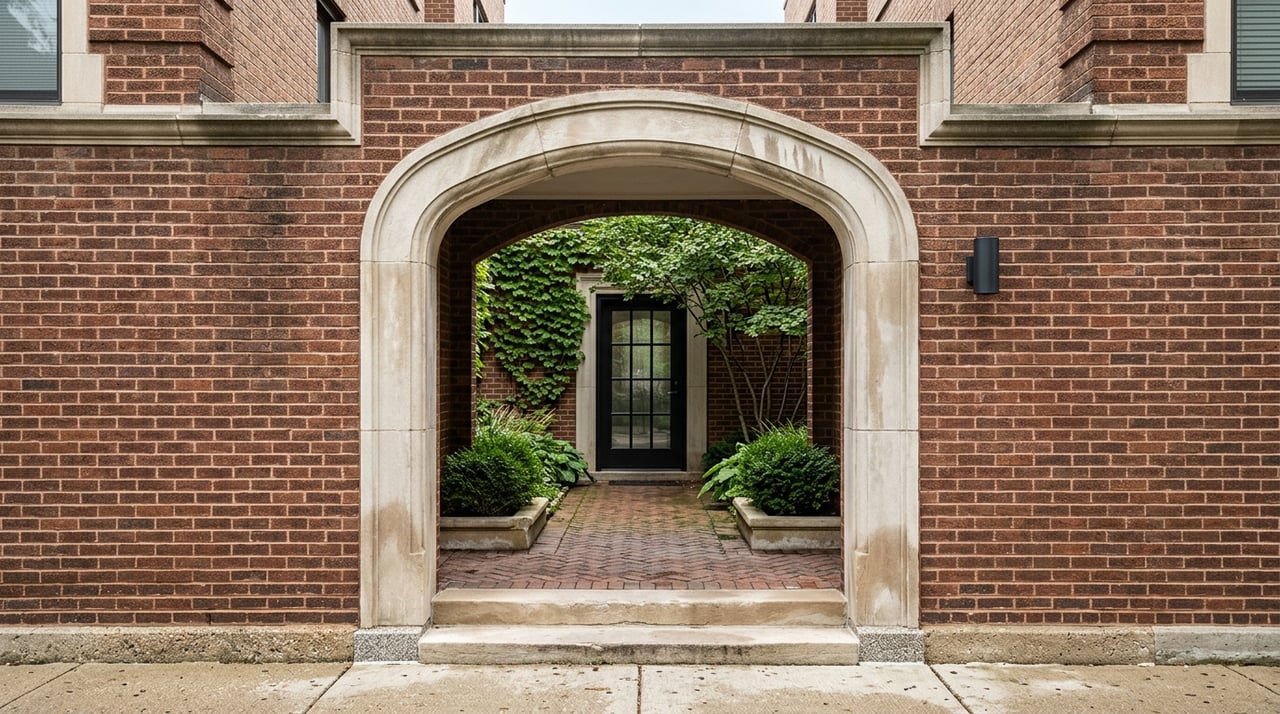
Another classic Logan Square building type is the courtyard apartment building. These were mostly built from the 1890s through the Great Depression and are typically three to four stories tall. Their defining feature is a shared central garden or court that brings in light, air, views, and a bit more privacy.
For buyers who want a larger-building experience without losing neighborhood scale, courtyard buildings can be especially appealing. They create density, but in a way that still feels human and residential. That is one reason Logan Square can feel lively without reading as wall-to-wall high-rise.
If you are comparing housing options, courtyard buildings often offer a different rhythm than smaller flat buildings. You may get more shared-entry character, more interior-facing green space, and a strong sense of vintage Chicago design.
A Quick Architecture Vocabulary Guide
If you are new to Chicago real estate, a few terms can make Logan Square easier to understand as you browse listings and tour homes.
Greystone
A greystone is a Chicago masonry residential building with a Bedford limestone front facade. In Logan Square, the term usually points to a late 19th or early 20th century building with a strong street presence.
Two-Flat Or Three-Flat
This is a small apartment building with one apartment per floor, usually in brick or stone. Common features include bay windows, a side porch, and a decorative cornice.
Courtyard Building
A courtyard building is a brick apartment building arranged around a shared inner garden. The court helps bring in light and air while making dense blocks feel a bit more private.
Bay Window
A bay window projects outward from the building facade. In older Chicago housing, it helps expand interior space and improve light and ventilation, which is one reason many vintage Logan Square homes feel brighter than you might expect from the floor plan alone.
What Buyers Can Expect In Logan Square
On the ground, Logan Square’s core streets tend to feel shaped by masonry, trees, and human-scale density. The landmark district includes residential, institutional, religious, and small commercial buildings, so the neighborhood presents more variety than a purely residential subdivision or a downtown-style corridor.
In practical terms, the boulevard blocks usually offer the grandest greystones and more substantial older houses. Nearby streets often provide the more everyday inventory of two-flats, three-flats, and courtyard apartment buildings. That gives buyers a range of options while keeping a clear architectural identity.
If you are trying to focus your search, the strongest historic character is generally concentrated on and near Logan, Kedzie, Palmer, and Humboldt Boulevards. The square and monument areas act as visual anchors, and the surrounding blocks carry much of the neighborhood’s classic architectural appeal.
The Tradeoffs Of Vintage Homes
Classic architecture often comes with classic upkeep. Century-old greystones can offer masonry construction, bay windows, and memorable details that are hard to replicate in newer housing. At the same time, older buildings often need ongoing attention to masonry, roofs, porches, windows, and major systems.
That does not make vintage housing a bad fit. It simply means you should understand the package clearly. If your goal is to buy into Logan Square’s architectural character, part of that decision includes caring for an older building over time.
This is where a neighborhood-focused approach matters. When you understand the building types, the historic layout, and the likely maintenance realities, you can make a more confident decision about what kind of property fits your goals.
Whether you are searching for a condo in a classic flat building, a greystone with real street presence, or a multi-unit property in Logan Square, local context makes a big difference. If you want help comparing blocks, building types, and opportunities in this part of Chicago, schedule a complimentary market consultation with Chicago Home Partner.
FAQs
What is the Logan Square Boulevards Historic District in Chicago?
- The Logan Square Boulevards Historic District is a landmarked historic area centered on Logan and Palmer Squares, with landscaped boulevards extending along Logan, Kedzie, Palmer, and Humboldt Boulevards north of Cortland.
What does greystone mean in Logan Square?
- In Logan Square, a greystone usually refers to a Chicago masonry residential building with a Bedford limestone front facade, typically dating from the late 19th or early 20th century.
What kinds of homes are common near Logan Square boulevards?
- Buyers often find substantial older houses, greystones, two-flats, three-flats, and courtyard apartment buildings, especially on and near the major boulevard streets.
Why do Logan Square homes often have bay windows?
- Bay windows were a useful feature in older Chicago housing because they added interior space and improved light and ventilation.
What should buyers know about maintaining vintage Logan Square homes?
- Buyers should expect that older buildings may need ongoing attention to items like masonry, roofs, porches, windows, and building systems over time.